
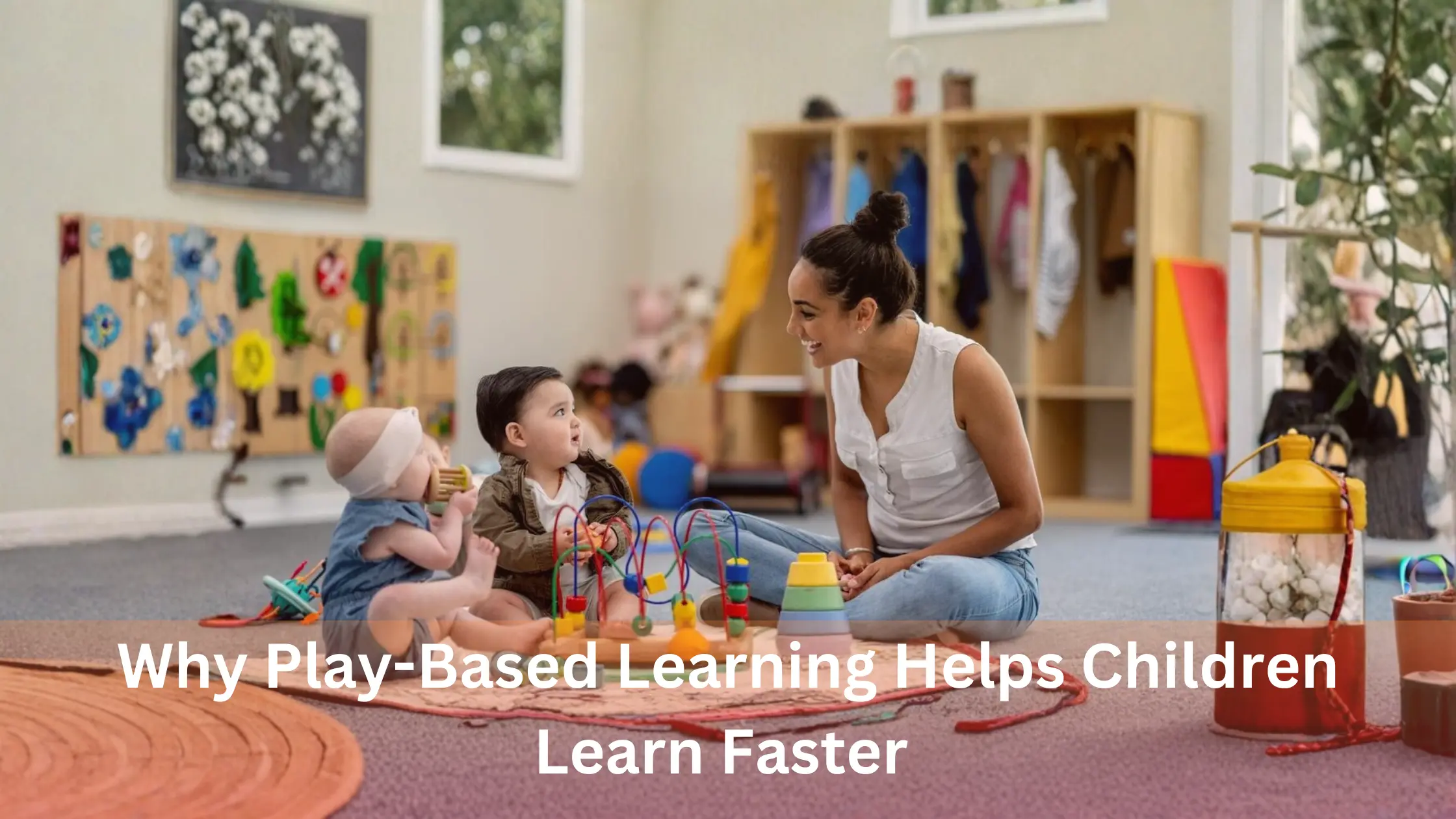
You have probably watched your child play and wondered if real learning is happening. It can look noisy, messy, and unplanned. But if you pause and observe, you will see focus, problem-solving, and curiosity at work. This is where play-based learning begins.
Play-based learning helps children learn faster because it matches how young minds grow. Children learn best when they are active, interested, and emotionally comfortable.
What Play-Based Learning Really Is
Play-based learning is not about filling the day with toys and hoping something sticks. It is learning that happens through purposeful play, guided by teachers who know when to step in and when to step back.
When your child builds with blocks, pretends to cook, or acts out a story, they are learning how things work. They test ideas, make choices, and adjust when something does not go as planned. This kind of learning feels natural, so children stay engaged longer.
Why Children Learn Faster When Learning Feels Meaningful
Children learn faster when they care about what they are doing. Play gives learning a reason.
During play-based learning, children are not trying to please an adult or avoid mistakes. They are exploring because they are curious. That curiosity keeps the brain open and alert. Information learned in this state is easier to remember and use again later.
Have you noticed how quickly your child learns the rules of a new game they enjoy? That same process supports learning in all areas.
Play Supports Attention and Focus
Young children are not built to sit still for long periods. Their attention grows through movement and interaction.
Play-based learning allows children to practice focus without pressure. When a child stays with an activity because they want to, that focus is deeper and more lasting. Over time, this builds the ability to concentrate during more structured learning.
You may see your child return to the same game again and again. Each time, they are strengthening attention and patience.
Language Grows Naturally Through Play
Language develops best when it is used for real communication.
During play-based learning, children talk to explain ideas, ask questions, and tell stories. They learn new words because they need them. Sentences grow longer because they have something to say.
This daily practice supports reading and writing later on. Children who talk with confidence during play often feel more comfortable expressing themselves in the classroom.
Problem-Solving Happens Through Trial and Error
Play gives children space to try, fail, and try again.
When a plan does not work, children adjust. They learn that mistakes are part of learning, not something to avoid. This builds problem-solving skills and confidence.
Play-based learning encourages children to think for themselves. That independence helps learning move faster because children are not waiting for answers. They are discovering them.
Emotional Skills Are Part of Learning
Learning does not happen without emotions.
During play, children practice sharing, waiting, handling disappointment, and working through conflict. Teachers can guide these moments gently, helping children understand feelings and respond calmly.
When emotional skills grow, learning becomes easier. Big feelings no longer stop progress. This is one reason play-based learning supports long-term success.
Does Play-Based Learning Prepare Children for School?
This is a common concern. Many parents worry that play means less learning.
In reality, play-based learning builds the foundation that academic learning depends on. Skills like focus, memory, language, and self-control develop through play. These skills help children succeed when formal learning begins.
Children who learn through play often enter school feeling confident instead of overwhelmed.
How Milestones Academy of Texas Uses Play-Based Learning
At Milestones Academy of Texas, play-based learning is used with intention. Teachers create environments where children can explore, move, talk, and imagine while building essential skills.
Learning happens through experience, not pressure. This approach supports social growth, communication, and early thinking skills in a way that feels natural to children.
So It’s Ok to Let Them Play
When learning feels enjoyable, children stay curious. When curiosity leads, learning lasts longer.
Play-based learning respects how children develop. It allows learning to unfold at a pace that feels steady and meaningful. Children are not rushed. They are supported.
Ask yourself this. Would you rather your child learn by fear of being wrong or by excitement to keep trying?
Play-based learning helps children learn faster because it works with how children grow. Through play, children build attention, language, problem-solving, and emotional skills that support lifelong learning.
When you choose environments that value play-based learning, you give your child more than information. You give them confidence, curiosity, and a strong foundation for what comes next.
Play is not a break from learning. For young children, it is learning.
FAQs
How is play-based learning different from academic-based programs?
Academic-based programs focus on early worksheets, memorization, and adult-led instruction. Play-based learning focuses on how children think, explore, and solve problems. Instead of pushing skills early, it builds the foundations that help children succeed later.
Does play-based learning work for children who like structure?
Yes. Play-based learning still includes routines and clear expectations. The difference is how learning happens within those routines. Children learn through guided activities and choice, not pressure. This often works well for children who need predictability.
Can play-based learning help shy or reserved children?
It often does. Play gives children a low-pressure way to engage without being put on the spot. Shy children can participate at their own pace while still building confidence and social skills over time.
How do teachers assess progress in play-based learning?
Teachers observe how children interact, communicate, solve problems, and manage emotions during play. Progress is measured through real-life behaviors rather than test scores. This gives a more complete picture of development.
What should I look for during a tour of a play-based school?
Look for children actively engaged, teachers interacting at eye level, and conversations happening during play. In Lewisville, high-quality play-based learning programs often balance freedom with calm structure.
Is play-based learning appropriate for full-day programs?
Yes. Play-based learning works especially well in full-day settings because it supports focus and reduces burnout. Children stay engaged longer when learning feels natural throughout the day.
How does play-based learning support children with different learning styles?
Play-based learning allows children to learn through movement, visuals, language, or hands-on experiences. This flexibility helps children who may struggle in traditional, sit-down learning environments.
Why do many Lewisville parents prefer play-based learning?
Many families in Lewisville look for programs that support emotional well-being along with academics. Play-based learning offers a balanced approach that helps children grow socially, emotionally, and cognitively.
Can play-based learning reduce behavior challenges?
Often, yes. When children can move, explore, and express themselves, frustration decreases. Play-based learning gives children appropriate outlets for energy and emotion, which can lead to calmer behavior.
How does Milestones Academy of Texas support play-based learning?
At Milestones Academy of Texas, play-based learning is supported through thoughtful classroom design, guided activities, and teacher-child interaction that encourages exploration and confidence.