
You kissed your toddler goodbye. You walked out the door. And then came the cry that followed you all the way to your car.
You sat in the parking lot asking yourself: “Did I do the right thing? Are they okay? Should I go back in?”
Here’s what most daycare teachers wish they could tell every parent in that moment: your child probably stopped crying before you got to the traffic light. And by snack time? They were laughing.
Separation anxiety at daycare is one of the most misunderstood parts of early childhood and one of the most common reasons parents dread the morning routine. This guide breaks down what’s actually happening, why kids bounce back so fast, and what makes the daycare drop-off routine easier for everyone.
What Is Separation Anxiety, and Why Does It Happen at Daycare?
Separation anxiety is a normal developmental stage that typically peaks between 10 months and 2 years, though it can resurface at 3 or 4 during periods of change. It happens because your child has formed a strong attachment to you, which is exactly what’s supposed to happen at this age.
When you leave, your toddler doesn’t yet understand that you’ll come back. Object permanence, the understanding that people and things still exist when out of sight, is still developing. “I’ll pick you up after nap” doesn’t land the way you intend it to. So their brain fires an alarm: “My safe person is gone!”
That alarm is what you hear as crying. It’s not manipulation, and it’s not a sign that something is wrong at daycare. It’s your child’s nervous system doing exactly what it was built to do: keeping them close to the people they depend on.
Separation anxiety at daycare tends to feel more intense in the first few weeks of enrollment, after a holiday break, or after your child has been home sick. That’s predictable and normal, not a sign you’ve made a wrong choice.
Why They’re Laughing an Hour Later
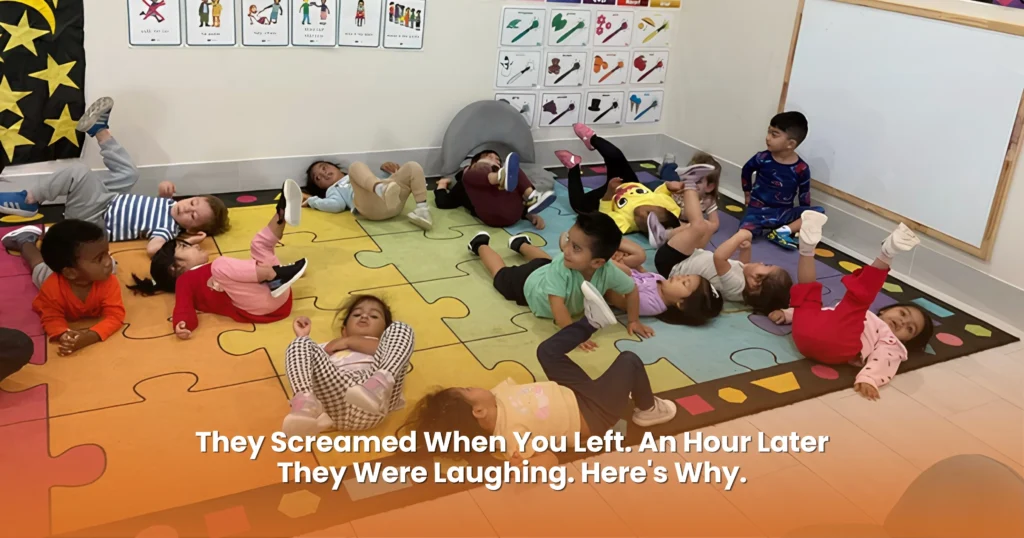
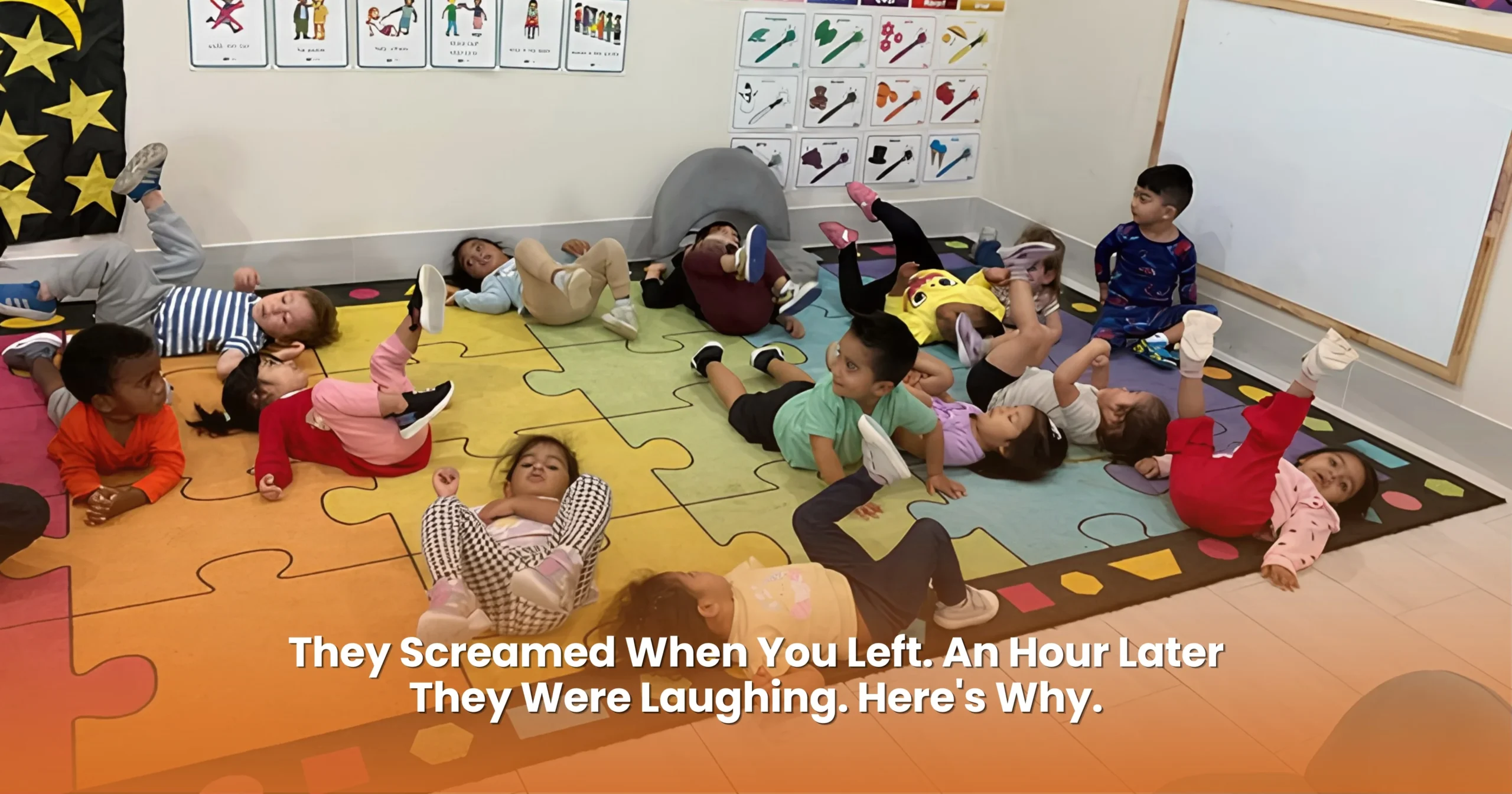
Toddlers live entirely in the present moment. Once their attention shifts to something interesting, like a puzzle, a friend or a song on the carpet, the distress goes with it. The tears that felt permanent to you were already fading before you pulled out of the parking lot.
Daycare teachers spend their days doing this. The moment you hand your child off, they’re already moving toward something: pulling out a toy, getting down on the floor, pointing at something across the room. Within a few minutes, most children are:
- Playing alongside other kids
- Helping set out snacks or materials
- Following a teacher around the room
- Absorbed in an activity they enjoy
- Already asking about lunch
Most children settle within 5 to 20 minutes of a parent leaving. That number tends to surprise people because the drop-off feels much longer when you’re the one walking away.
If you’ve ever doubted this, ask the teachers for a quick update text 15 minutes after you leave. Almost every parent who asks gets back the same answer.
Building a Drop-Off Routine That Helps
One of the most effective things you can do about separation anxiety at daycare is to make the goodbye itself consistent. Children do better when drop-off looks and feels the same every morning because familiarity is what tells their brain that this is safe and manageable.
Give yourself a few extra minutes. Rushed goodbyes make everything harder. If you’re flustered, your toddler feels it. Even five extra minutes of buffer changes the tone.
Build a short goodbye ritual and stick to it. A specific hug, a nose boop, a two-word phrase only the two of you use. It doesn’t need to be elaborate, but it needs to be the same every time. That repetition is what makes it a signal rather than just another goodbye.
Say goodbye directly. Tell your child you love them, that you’re leaving, and when you’ll be back in concrete terms: “after your nap” or “when the big hand is on the 12.” Then go. Don’t stand at the door.
Don’t sneak out. It feels kinder in the moment, but disappearing without a goodbye tends to make separation anxiety worse over time, not better. Your child needs to know that goodbyes are real and that you always come back after one.
Hand off and leave with confidence. Your body language matters more than your words at this age. A calm, matter-of-fact handoff tells your child that the teachers have this and you’re not worried which gives them permission not to be worried either.
Toddler Separation Anxiety Tips for the Harder Mornings
Even once things are going smoothly, some mornings will be harder. Mondays after a long weekend, the first week back after illness and any stretch where your child’s sleep or schedule at home has been disrupted can bring a reset. Expect it, and don’t read too much into it.
These toddler separation anxiety tips help on the rough days specifically:
- Send a comfort item from home. A small stuffed animal, a photo of the family, or even a scarf that smells like you can help a child feel connected during the day.
- Talk about daycare the night before in a casual, low-key way. Not “Tomorrow will be so fun!” just “What do you think you’ll play with tomorrow?” Treating it like a normal, expected part of life helps.
- Keep your own goodbye energy neutral. High energy tells your child that this is a big deal that calls for big feelings.
- Ask for a quick check-in. Most daycare teams are happy to send a short text or photo after drop-off on hard days. It takes them 30 seconds and it can genuinely help you get through the morning.
When to Talk to the Teaching Team
For most children, separation anxiety at daycare gets easier over the first few weeks. The goodbyes get shorter, the mornings feel less loaded, and drop-off stops being the thing you dread all evening.
If that’s not happening after a month, if crying is lasting more than 30 to 45 minutes consistently, or if you’re noticing stomachaches or headaches before school or your child seems withdrawn at pickup, bring it up with the teachers directly. They see your child all day and will have observations you don’t.
These things don’t necessarily mean something is wrong, but they’re worth talking through. Good teachers have navigated this many times and can adjust how drop-off is handled. You don’t have to figure it out on your own.
You’re Doing Better Than You Think
Walking back to your car while your child cries is genuinely hard. Every parent who has done it knows that the feeling doesn’t just disappear when you close the door.
What helps is knowing what’s on the other side of that door. Your child is probably fine. Not eventually fine, not fine after a long struggle, but already moving on to the next thing, already asking a teacher something about a dinosaur or a truck.
Separation anxiety at daycare is one of those things that feels enormous from the outside but it’s manageable from the inside. The teachers have seen it a thousand times. And with a consistent routine and a little time, you’ll start to trust that, too.
Want to see the classrooms before your child’s first day?
A tour helps — for you and for your child. Come meet the teachers, see the space, and ask anything you’d like before the first drop-off.